
The parasocial contact between non-disabled ingroup viewer and disabled outgroup character does not have to be direct. It can be extended when there is an intimate and positive relationship between an outgroup character and an ingroup character on screen. That cross-ability relationship can be a strong friendship, kinship, or a romantic relationship.

For instance the Squirmy and Grubs YouTube channel depicts Shane, who has a severe muscle wasting disease and uses a wheelchair, and Hannah, who has no disability. The numerous videos depict their everyday lives and their intimate moments as a loving, married couple.

For a non-disabled viewer, the non-disabled screen character (Hannah) serves like an avatar who breaks the social distance on screen by having an intimate and positive relationship with a disabled character (Shane). This relationship enables the non-disabled viewer to extend their positive attitude toward a disabled person.
For extended intimacy to reduce stigma, the non-disabled character needs to appear relatable and generally likeable to the non-disabled viewer. This can be achieved through perspective-taking techniques. Moreover, the disabled character should not be stereotyped, unlike in the example of Me Before You.
Extended intimacy is relatively rare in media representations. This may be because an ableist society implicitly deems these kind of relationships transgressive and a threat to body normativity. Especially romantic relationships between disabled and non-disabled people are perceived as transgressive, since the depicted love life and sexuality of disabled people have been generally suppressed in society and media. Nevertheless, here are some notable exceptions for extended, cross-ability intimacy.


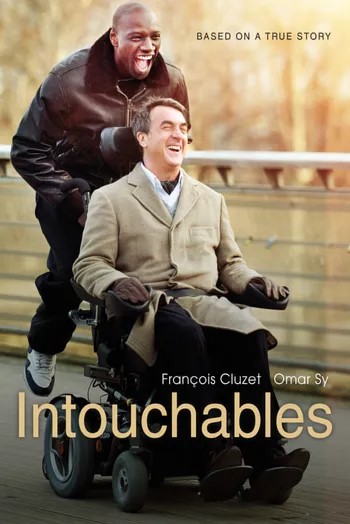


From a disability stigma perspective, some of these films are still problematic. For instance, Corro da Te uses a non-disabled actress to play a paraplegic character – an example for the controversial practice of ‘cripping up’. The story also centres on the theme of disability, which facilitates the activation of disability stereotypes. In addition, the disabled female character is unrealistically idealised by being classically beautiful and professionally over-accomplished, touching on the supercrip stereotype.
Also, when depicting same-sex friendships in the ‘buddy films’, such as The Eighth Day, there is an underrepresentation of female cross-ability friendships.
Still, some of these films represent very multi-layered, rounded and intersectional characters who are not reduced to their disability. Downsizing is an especially interesting example: Despite being a mainstream Hollywood film, the female lead is a complex combination of being disabled, likeable, annoying, unglamorous, quirky, gentle, not classically beautiful, a victim and a role model. The film also adds, like Give me Liberty and Intouchables, cross-ethnicity to cross-ability, which can reduce stigma for additional outgroups, such as Black people.
Read more about extended intimacy in Chapter 9.
In the next section we discuss the strategy of common identity, which can maximise a sense of inclusion in the non-disabled viewer.